


Speakers: 8th icSoftComp2026
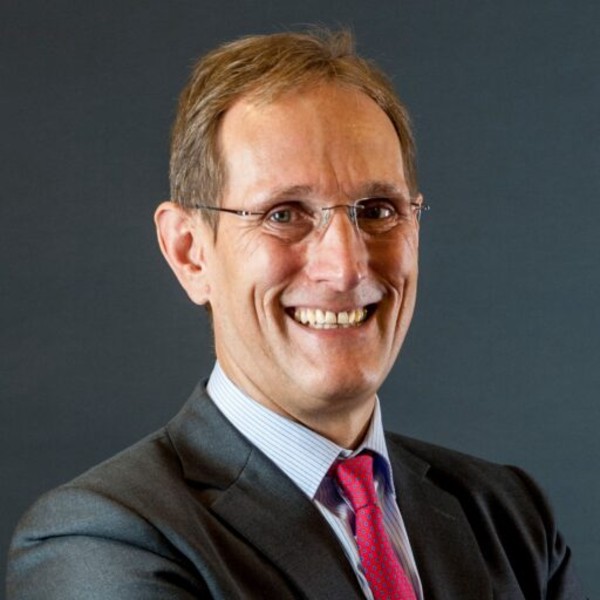
Jochen Wirtz
National University of Singapore (NUS), Singapore
Title: Agentic AI Meets Service: The Promise of Virtual & Physial AI in the Service Sector
Abstract: Agentic agents in virtual and physical form with their large language models (LLMs), large behavioral models (LBMs), agentic AI, and their no-code feature will transform the service sector, automate more complex service tasks, democratize robot training, and also cause critical ethical and organizational challenges for service firms.
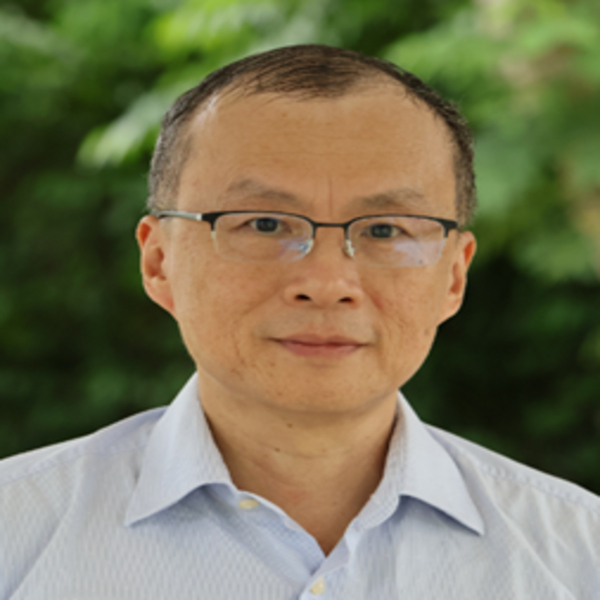
Lipo Wang
Nanyang Technological University, Singapore
Title: Progress in Deep Learning for Medical Image and EEG Classification
Abstract:
In recent years, deep learning has been enjoying many successful applications in the entire
spectrum of technology. This talk highlights some of our recent research results in deep
learning for medical image and EEG classification. Our algorithms include T2C CNN
(Temporal-to-Context Convolutional Neural Network), 3D convolutional neural networks
(CNNs) with thresholding and attention, a transformer-based multilevel filtering framework,
batch normalization with domain-matching, and a time-frequency transformer (TFormer). We
demonstrate our algorithms in various challenging problems, such as Binding Type
Classification in DNA-PAINT (Points Accumulation for Imaging in Nanoscale Topography),
Nanopillar Arrays Images for Disease and Aging Cell Classification, Small Extracellular
Vesicles and Nanoparticles (sEVPs) for Medical Diagnosis, Bacterial Cytological Images for
Antimicrobial Resistance (AMR) Recognition, Lipid-Dyed Temporal Tear Film Images for
Trauma Severity Classification, brain trauma diagnosis, glaucoma diagnosis, emotion and
fatigue recognition based on multi-subject EEG signal classification.

Kay Römer
TU Graz, Graz University of Technology, Austria
Title: Embedded AI for Safety-Critical Applications
Abstract:
Safety, but also latency and privacy requirements of embedded applications motivate
shifting AI functions from the cloud not just to the edge, but onto embedded devices which are
typically very resource-constrained, often featuring a microcontroller with few hundreds of
Kilobytes of RAM and few MegaFLOPS of computing power due to the limited energy supply. An
example application are distance measurements with ultra-wide-band receivers to enable car
access only if the legitimate owner / driver is physically close or in the car. However, in
many environments the line-of-sight between a transmitter and a receiver is obstructed by
obstacles, which can lead to substantial inaccuracies as the wireless signals then reach the
receiver via reflections or the signals travel through the obstacles or along the surface of
the obstacles at different propagation speed. In this talk I present tools and techniques to
develop machine learning solutions for such resource-constrained embedded platforms that meet
the requirements of safety-critical applications.

João M.F. Rodrigues
Universidade do Algarve, Faro, Portugal
Title: Affective Intelligence in the Wild: Real-Time Engagement, Emotion, and Satisfaction Analytics for Human-Centred Events
Abstract: Affective computing is moving beyond controlled laboratory settings toward real-world, dynamic, and socially complex environments where emotions, attention, engagement, and satisfaction emerge from subtle multimodal cues. This talk presents a research trajectory on privacy-preserving affective analytics for live events, crowded environments, exhibition stands, service queues, retail spaces, and audience-centred experiences. Building on recent work on microscopic engagement estimation using gaze and posture, holistic architectures for computer-vision-based audience analysis, crowd counting, emotional body gesture recognition, multimodal sentiment classification, and longitudinal queue analysis, it discusses how soft computing methods can transform noisy, partial, and uncertain human behavioural signals into actionable collective intelligence.
The central theme is the transition from individual cues to group-level and crowd-level affective understanding. The proposed perspective integrates gaze, posture, body expression, spatial dynamics, crowd density, queue behaviour, sentiment indicators, and multi-sensor fusion into scalable models capable of operating in real time and, when appropriate, at the edge. Rather than focusing on identity recognition, the approach emphasises anonymous and privacy-aware behavioural interpretation, enabling organisers, service providers, and decision-makers to understand how people attend, move, interact, wait, engage, and respond to physical experiences.
The talk concludes by outlining open challenges for affective computing in the wild: dataset scarcity, ecological validity, multimodal uncertainty, explainability, GDPR-aware sensing, real-time deployment, edge processing, and the ethical transformation of affective computing into trustworthy decision-support systems for human-centred environments.
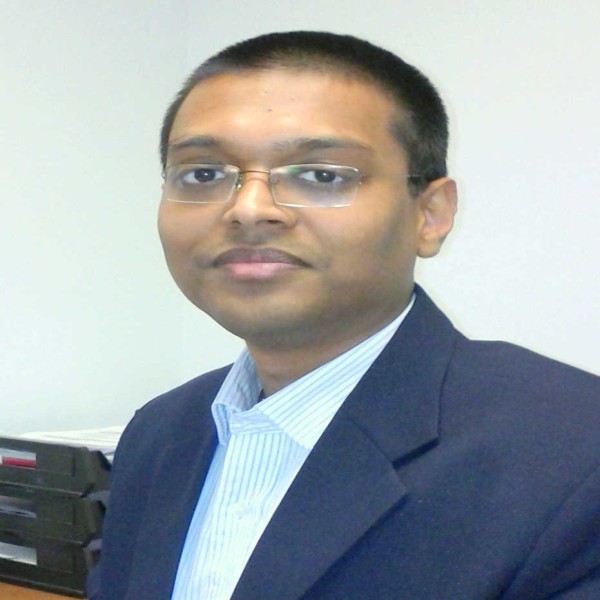
Ankit Agrawal
Northwestern University, USA
Title: AI for Science and Engineering: Leveraging GNNs, LLMs, XAI, and Nanocombinatorics
Abstract: The increasing availability of data from the first three paradigms of science (experiments, theory, and simulations), along with advances in artificial intelligence and machine learning (AI/ML) techniques has offered unprecedented opportunities for data-driven science and discovery, which is the fourth paradigm of science. Within the arena of AI/ML, deep learning (DL) has emerged as a game-changing technique over the last decade with its ability to effectively work on raw big data, bypassing the (otherwise crucial) manual feature engineering step traditionally required for building accurate ML models, thus enabling numerous real-world applications. In this talk, I will present some of the ongoing AI/ML/DL research in our group with illustrative real-world applications in materials science and engineering, by leveraging graph neural networks (GNNs), large language models (LLMs), explainable AI (XAI), and generative AI (GenAI). We will also see how AI can be used to accelerate nanocombinatorics workflows to facilitate rapid structure characterization of megalibraries with millions of nanoparticles on a chip.
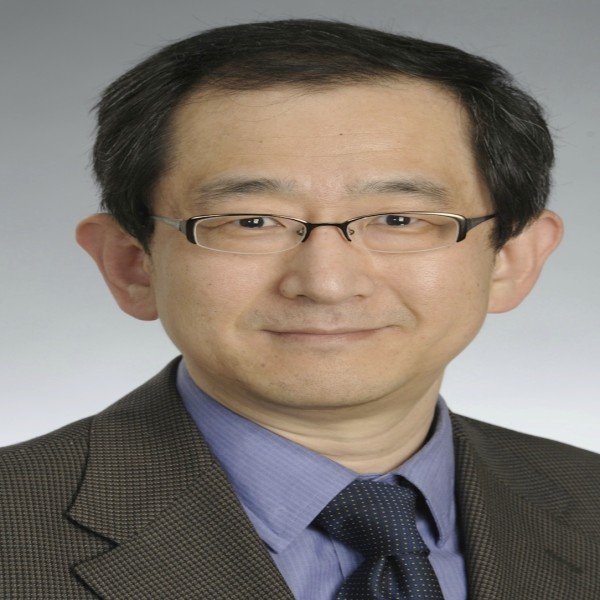
JingTao Yao
University of Regina, Saskatchewan, Canada
Title: Securing and Stabilizing Federated Learning through Robust Aggregation and Generative Continual Learning
Abstract:
Federated Learning (FL) enables privacy-preserving, decentralized model training by keeping data on local devices rather than centralizing it. However, deployment is hindered by security vulnerabilities, heterogeneous data distributions, and the demands of continual adaptation. This paper introduces the core concepts of FL and highlights recent research advances aimed at enhancing the security, robustness, and sustainability of decentralized systems.

Stefan Pickl
University of the Bundeswehr Munich, Germany
Title: Digital Twins AI System Analysis (DAISY): Digital Twins for the Analysis and Optimization of Complex Systems and Critical Infrastructures
Abstract:
As part of the research project »OPERA - Future Operations« an interdisciplinary consortium develops a trend-setting interactive visualization tool DAISY to support decision makers politics, to adapt and to explore different strategies especially with the aid of digital twins. This talk gives an overview on that project DAISY. Furthermore it presents the special sector-based approach IDEA4C as part of the IRIS project:
I - Identification of critical regions, sectors and coupling principles
Cost-Benefit Analysis for complex sectors.
D - Data-driven constraint optimization
Coupled Sector-based Models
E - Exploratory Strategies/ Recognition of critical pathways and sectors
Characterization of Pathways
A - Adaptation and Quantifying Analysis
Coordination of Strategies
This 4C-approach describes a new integrated modelling suite for developing and assessing strategic distribution strategies for the protection of critical infrastructures. With the aid of a digital twin “IRIS” approach, further analytic insights ”IDEA” should be supported. First computational results based on AI-approaches will be presented.

Shafkat Islam
Purdue University Northwest, Hammond, IN, USA
Title: Towards Robust and Secure AI Agents in Open World
Abstract:
As we enter a transformative era driven by artificial intelligence (AI)-based agents, my research addresses critical challenges at the intersection of AI and cybersecurity. My work focuses on developing secure and robust AI agents to tackle emerging cyber threats in open-world environments, ensuring they remain resilient and trustworthy under adversarial conditions. In this talk, I will present how my research addresses these challenges by (i) developing an environment-agnostic and evidence-based framework to analyze the robustness of deep reinforcement learning agents in an open-world environment, (ii) understanding the impact of reasoning path hijacking and triggerless backdoor attacks and its mitigation strategy for a team of AI agents, and (iii) the design of orchestration and monitoring mechanisms for resilient and fault-tolerant computation in heterogeneous computing platforms.
Speakers of previous editions of icSoftComp

Edgar Weippl
University of Vienna, Vienna, Austria

Marco Dorigo
Université Libre de Bruxelles, Brussels, Belgiuma

Ahmad Bazzi
New York University Abu Dhabi, UAE

Tatiana Kalganova
Brunel University of London, London, UK
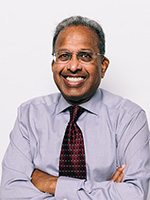
Bharat Bhargava
Purdue University, Indiana, USA
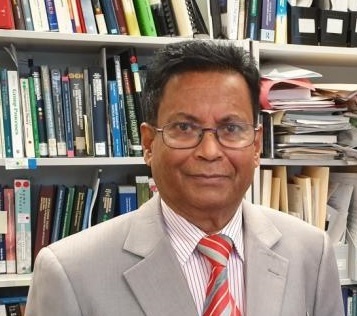
Sardar Islam
Victoria University, Melbourne, Australia

Witold Pedrycz
University of Alberta, Alberta, Canada

Dimitrios A. Karras
National and Kapodistrian University of Athens, Greece
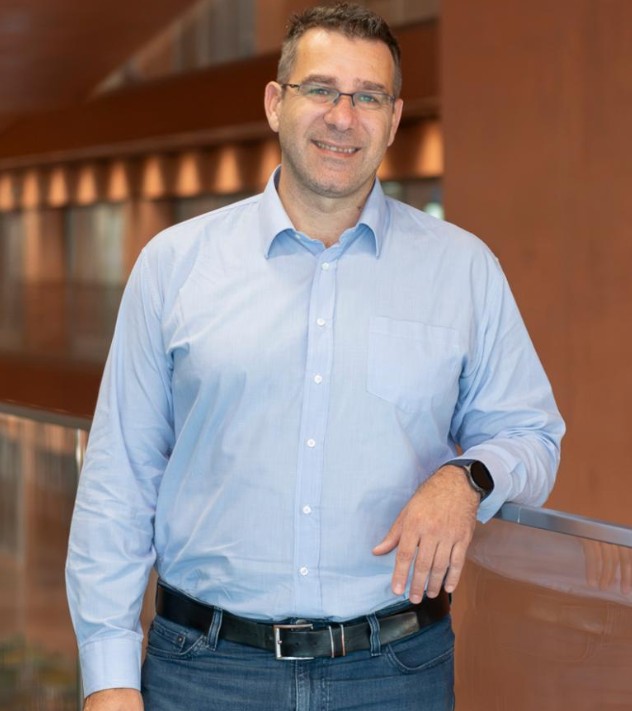
Massimiliano Cannata
SUPSI, Canobbio, Switzerland

Unnati Shah
Utica University, Utica, NY, USA

Donatella Firmani
Sapienza University of Rome, Rome, Italy

Hong Nhung Nguyen
Gachon University, Seoul, South Korea
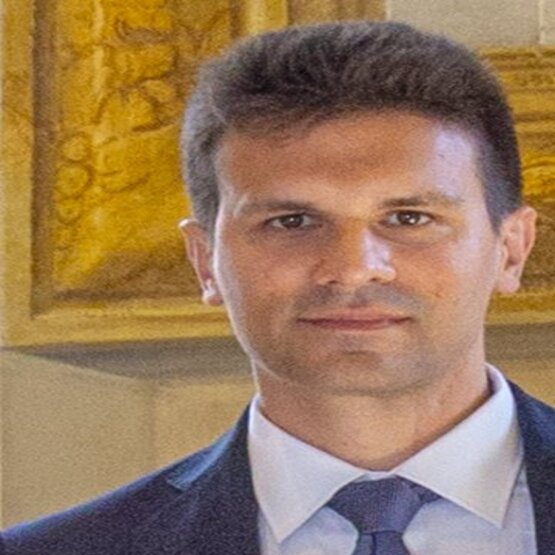
Theofanis P. Raptis
Institute of Informatics and Telematics, National Research Council (CNR), Pisa, Italy

Flora Ferreira
University of Minho, Portugal

Xun Shao
Toyohashi University of Technology, Aich, Japan

Ashis Jalote Parmar
Norwegian University of Science and Technology, Torgarden, Norwaye